Dreamt about Dreaming...
脳みその保管庫として.
Saturday, November 09, 2019
Lapalux - Amnioverse
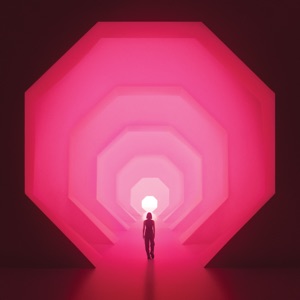
<br /> Lapalux (aka Stuart Howard) returns to Flying Lotus’ Brainfeeder for his fourth album. “Amnioverse”—“a sort of portmanteau of the amniotic sac and the universe,” he explains—revolves around notions of fluidity; that birth, life, death, and rebirth is a never ending continuum.<br /> <br /> He channels these ethereal ideas through a new and ever-expanding modular synth set-up, injecting human emotion, and layering recordings of weather, wind, rain and fire, lending an elemental, celestial feel to the composition. While 2017’s “Ruinism” was about sonic wreckage and deconstruction, with “Amnioverse”, Howard took a different approach, basing each track around a snippet of spoken word from “friends, lovers, and ex partners”, and building the music around it. He also reconnects with Icelandic vocalist JFDR (Jófríður Ákadóttir) who returns for two tracks on ’Thin Air’ and ‘The Lux Quadrant’, as well as vocalist Lilia on ‘Limb To Limb’, ‘Voltaic Acid’ and ‘Momentine’. “For me the real focus was that the whole record flowed,” he says. ”I worked on each song sequentially and wouldn’t stop working on a session until they fitted together and told the story that I wanted to tell.”<br /> <br /> Initial inspiration for the album came from a photograph of James Turrell’s Twilight Epiphany Skyspace installation in Texas. “I looked at it every day for three years whilst making this record.” explains Howard, “People are sitting in what looks like a waiting room lit in a purple hue, looking up at the dark night sky through a rectangular hole in the ceiling. The image has so much depth and means so much to me.... it seems like we are all in that waiting room, waiting to be somewhere or go somewhere. That’s what I tried to encapsulate in this record.”<br /> <br /> Turrell's influence extends to the album cover too, itself an homage to the artist’s groundbreaking work with light, shadow and perspective. Conceived by Creative Director and photographer Dan Medhurst and Owen Gildersleeve—an expert in hand-crafted illustration and set design—the build stemmed from a vision that Howard imagined: “I initially had an idea of a person, or group of people, in an impossibly large room set in a fog of pink looking into a void symbolic of a womb or amniotic sac,” he says. “We then ran with the idea of making a structure that had a deeper perspective, the ever decreasing octagon shape that suggests a sort of birth canal into the unknown.”<br /> <br /> Support for Lapalux has come from the likes of Pitchfork, Mixmag, FADER, FACT, Dazed, SPIN, The Wire, A.V. Club and many more. With Benji B, Huw Stephens, Lauren Laverne, Mary-Anne Hobbs and many others championing his music across radio.<br /> <br /> Capping off last year with two standout performances at the Brainfeeder X showcase at Brixton Academy, and alongside Jacques Greene at Brooklyn’s Elsewhere, Lapalux is set to return with a new live-AV show—driven and delivered by his modular gear set-up—to present a cohesive light, projection and sound performance. <br />
brainfeedersite.com
lapalux.com
Monday, November 04, 2019
:PAPERCUTZ - King Ruiner
<a href="http://papercutz.bandcamp.com/album/king-ruiner"><br /> ‘King Ruiner’ is :PAPERCUTZ's 3rd original album featuring songs recorded in Porto, Nyc, Hamburg and Tokyo. The group lead by Bruno Miguel has returned to touring throughout Europe and the U.S. after an hiatus to record their new album. The globally sourced strains of pop songs feature shadowy and exotic electronic sounds, layered folk choral vocals, minimalist synth motifs, atmospheric textures and percussive beats.<br /> <br /> The album follows the character portrayed in previous recordings finding his way through a tension of failure and uncertainty versus ultimate hope.<br /> <br /> "The idea for these collection of songs really shifted on this last year of my life. My work as :papercutz has been inspired from memories of childhood til challenges within manhood, going through high and low times, struggling with balance and uncertainty. I had decided to back off recording and just keep trying out the songs live on tour but also working on other projects, producing artists or composing movie scores. Those gave me the insight I really needed to fulfil this album to its fullest extension, connecting with musicians far away from home in a truly global music production effort. By diving on these recordings I had to deal with my own notion of non-fulfilment but coming to understand there was an underlying feeling of hope, one that has always been part of my writing and it slowly started strengthening again... showing there's no real definitive ends, we're all but changing and made up of new beginnings." (Bruno)<br /> <br /> <br /> Songs written and performed / lyrics by Bruno Miguel. <br /> <br /> Guest vocals by Catarina Miranda, Rena Morizono and Selam Kurgen.<br /> <br /> Mixed and produced by Bruno Miguel at Red Bull Music Studios New York. <br /> <br /> Vocal engineering and recordings by Ricardo Gandra and Tim Hartig.<br /> <br /> Mastered by Sam Jon at Precision Mastering UK.<br /> <br /> Album cover photo by Aëla Labbé. Artistic direction and design by Susana Maia.<br /> <br /> Ⓟ :PAPERCUTZ under license to Kilk Records / Sounds Of A Playground <br /> <br /> Published by Rossio Music</a>
papercutzed.com
Bolten M - El Heredero
renraku.global
soundcloud.com/bolten-m
Thursday, October 31, 2019
Ben Davis - Cycles
<a href="http://detund.bandcamp.com/album/cycles"><br /> Ben Davis - Cycles EP<br /> cat# DU-NTRL03<br /> <br /> Ben Davis is a programmer/engineer who has been involved in making many Eurorack modules over the past few years. Most notable of his work are the ideas he's incorporated in sequencers such as the Voltage Block and Varigate. The ideas he's put into hardware are heavily focused on generative music incoporating finely tuned randomization.<br /> <br /> On "Cycles" he aims for a new approach by only using software. The software of choice for these live recorded pieces is TidalCycles. He uses this software to access functions that are familiar on hardware sequencers while taking advantage of endless modulation abilities of TidalCycles.<br /> credits<br /> released October 22, 2019<br /> <br /> W+P by Ben Davis<br /> <br /> Remix by Valance Drakes.<br /> <br /> Live Coding videos by Ben Davis<br /> <br /> <br /> -<br /> Graphic Design by ANTIREAL™ ( Ben Hook ) antireal.info<br /> #DUNTRL<br /> <br /> <br /> do<br /> let snarPat = "~ [sn:2]"<br /> d1<br /> $ degradeBy "1 0.9 0.75 0.2 1 0.9 0.2 1 1 0.5 1 1 1 0.7 0.1 1"<br /> $ fast 8<br /> $ foldEvery [3,10,15] (#delay (range 0 0.5 $ rand))<br /> $ every 3 (chop 256)<br /> $ every 7 ( # pan (slow 1.8 (sine)))<br /> $ iter (cycleChoose[4,8,12])<br /> $ s "sk:1 ~ sk:2"<br /> # pan (range 0 1 $ (slow 3) sine)<br /> # (slow 6) (speed "1 <1 3 0.7 5.2>")<br /> # delayfeedback (cycleChoose[0.1,0.2,0.3,0.7, 0.001])<br /> # delaytime (choose[(1/16),(3/16),(1/32),(5/16),(7/32),(9/32)])<br /> # orbit 1<br /> # cps 0.32<br /> d2<br /> $ fast 2<br /> $ stack<br /> [<br /> fast 2 $<br /> degradeBy "1 1 0.3 1 0.3 1 1 1 0.3 1 1 0.4 1 1 0.4 1" $<br /> ((range 0.0 0.8 $ rand) ~>) $ s snarPat<br /> # delay (range 0.4 0.8 $ rand)<br /> # gain (range 0.6 1.0 $ rand)<br /> # delaytime (choose[(1/8),(1/16),(3/16)])<br /> # delayfeedback (range 0.1 0.9 $ rand) # speed (cycleChoose[0.9,1,2]),<br /> snarPat # speed (range 1 1.1 $ (slow 128) sine) # pan (range 0.4 0.6 $ rand)<br /> ]<br /> # release (range 0.07 0.3 $ rand)<br /> # room (range 0 0.5 $ rand)<br /> # size (range 0 0.8 $ rand)<br /> # orbit 1<br /> d3<br /> $ slow 1<br /> $ within (0.2, 0.8) (stut (cycleChoose[5,3,8]) (range 0.3 0.9 $ rand) (cycleChoose[(3/16),(1/16),(1/8),(1/32)]))<br /> $ s "sk:0" # speed 0.8<br /> # orbit 1<br /> d4<br /> $ degradeBy "0 0.4 0.8 0.3 0.3 0.8 0.2 0.532 0.45 0.1 0.8 0.8 0.3 0.614 0.5 0.8"<br /> $ fast 4<br /> $ whenmod 3 2 (hurry (choose[2,4,8,16]))<br /> $ whenmod 8 7 (#attack 0.2)<br /> $ sound "violin" # cut "2"<br /> # gain 0.8<br /> # begin (range 0 0.5 $ (slow 3) rand)<br /> # speed (choose[0.125,0.25])<br /> # lpf (range 2000 11000 $ rand)<br /> # release (range 0.2 0.4 $ (slow 4) rand)<br /> # room 0.9<br /> # size 0.9<br /> # up (slow 16 (cycleChoose[0,4,7,5,11,9]))<br /> # orbit 0<br /> d5<br /> $ fast 1<br /> $ every 7 (hurry (choose[2]))<br /> $ ((cycleChoose[0.25,0.125,0.5]) ~>)<br /> $ s "bs:3" # cut "5" # up (cycleChoose[0,4,9,11])<br /> # gain 0.8<br /> # speed (cycleChoose[0.5,1])<br /> # end 0.7<br /> # decay 3<br /> # orbit 1<br /> d6<br /> $ fast 1<br /> $ loopAt (fast 16 ("<0.5 0.25 0.125 1>"))<br /> $ chop 64<br /> $ foldEvery [7,11,19] (0.25 ~>)<br /> $ foldEvery [6,13] (# accelerate 0.2)<br /> $ chunk 5 (# speed "<2 4 0.5 1>")<br /> $ iter (cycleChoose[2,8,4])<br /> $ s "tm tm*2 click:2 cp:2"<br /> # release (range 0.02 0.1 $ (slow 8) sine)<br /> # pan (range 0 1 $ (slow 2) rand)<br /> # orbit 1<br /> # gain 0.8<br /> # speed (cycleChoose[0.25,0.5,1,2])<br /> d7<br /> $ every 3 (hurry 4)<br /> $ striate (cycleChoose[16,32,1])<br /> $ loopAt (cycleChoose[1,0.5,0.25,0.125])<br /> $ s "click ~ ~ click ~ ~ cy:2 ~"<br /> # up (cycleChoose[0,7,9,12])<br /> # speed (cycleChoose[0.5,1,2,4])<br /> # release (range 0.01 0.02 $ (slow 3) sine)<br /> # orbit 1<br /> # gain 0.7<br /> d8<br /> $ slow "8 4 3"<br /> $ striate 16<br /> $ every 3 (zoom (0.4, 0.6))<br /> $ fast "0.5 0.25"<br /> $ s "lead*2 <lead*8 lead*12 lead*4>"<br /> # up (choose[0,4,9,11,7])<br /> # speed (cycleChoose[0.25,0.5,1,2])<br /> # gain 0.8<br /> # release (range 0.05 0.2 $ (slow 4) sine)<br /> # orbit 1<br /> <br /> unsolo 8<br /> <br /> hush</a>
detroitunderground.net
instagram.com/bendedavis
Floating Points - Crush
<a href="http://floatingpoints.bandcamp.com/album/crush"><br /> Sam Shepherd aka Floating Points has announced his new album Crush will be released on 18 October on Ninja Tune. Along with the announcement he has shared new track 'Last Bloom' along with accompanying video by Hamill Industries and announced details of a new live show with dates including London's Printworks, his biggest headline live show to date.<br /> <br /> The best musical mavericks never sit still for long. They mutate and morph into new shapes, refusing to be boxed in. Floating Points has so many guises that it’s not easy to pin him down. There’s the composer whose 2015 debut album Elaenia was met with rave reviews – including being named Pitchfork’s ‘Best New Music’ and Resident Advisor’s ‘Album of the Year’ – and took him from dancefloors to festival stages worldwide. The curator whose record labels have brought soulful new sounds into the club, and, on his esteemed imprint Melodies International, reinstated old ones. The classicist, the disco guy that makes machine music, the digger always searching for untapped gems to re-release. And then there’s the DJ whose liberal approach to genre saw him once drop a 20-minute instrumental by spiritual saxophonist Pharoah Sanders in Berghain.<br /> <br /> Fresh from the release earlier this year of his compilation of lambent, analogous ambient and atmospheric music for the esteemed Late Night Tales compilation series, Floating Points’ first album in four years, Crush, twists whatever you think you know about him on its head again. A tempestuous blast of electronic experimentalism whose title alludes to the pressure-cooker of the current environment we find ourselves in. As a result, Shepherd has made some of his heaviest, most propulsive tracks yet, nodding to the UK bass scene he emerged from in the late 2000s, such as the dystopian low-end bounce of previously shared striking lead single ‘LesAlpx’ (Pitchfork’s ‘Best New Track’), but there are also some of his most expressive songs on Crush: his signature melancholia is there in the album’s sublime mellower moments or in the Buchla synthesizer, whose eerie modulation haunts the album.<br /> <br /> Whereas Elaenia was a five-year process, Crush was made during an intense five-week period, inspired by the invigorating improvisation of his shows supporting The xx in 2017. He had just finished touring with his own live ensemble, culminating in a Coachella appearance, when he suddenly became a one-man band, just him and his trusty Buchla opening up for half an hour every night. He thought what he’d come out with would "be really melodic and slow- building" to suit the mood of the headliners, but what he ended up playing was "some of the most obtuse and aggressive music I've ever made, in front of 20,000 people every night," he says. "It was liberating."<br /> <br /> His new album feels similarly instantaneous – and vital. It’s the sound of the many sides of Floating Points finally fusing together. It draws from the "explosive" moments during his sets, the moments that usually occur when he throws together unexpected genres, for the very simple reason that he gets excited about wanting to "hear this record, really loud, now!" and then puts the needle on. It’s "just like what happens when you’re at home playing music with your friends and it's going all over the place," he says.<br /> <br /> Today's newly announced live solo shows capture that energy too, so that the audience can see that what they’re watching isn’t just someone pressing play. Once again Shepherd has teamed up with Hamill Industries, the duo who brought their ground-breaking reactive laser technologies to his previous tours. Their vision is to create a constant dialogue between the music and the visuals. This time their visuals will zoom in on the natural world, where landscapes are responsive to the music and flowers or rainbow swirls of bubbles might move and morph to the kick of the bass drum. What you see on the screen behind Shepherd might "look like a cosmos of colour going on," says Shepherd, "but it’s actually a tiny bubble with a macro lens on it being moved by frequencies by my Buchla," which was also the process by which the LP artwork was made." It means, he adds, "putting a lot of Fairy Liquid on our tour rider". </a>
ninjatune.net
floatingpoints.co.uk
Newer Posts
Older Posts
Home
Subscribe to:
Posts (Atom)